How a custom holiday gift box is built, layer by layer
Rigid board, moulded pulp inserts, foil ribbon and card stock — how a year-end corporate gift box is specified and assembled for wholesale programs.
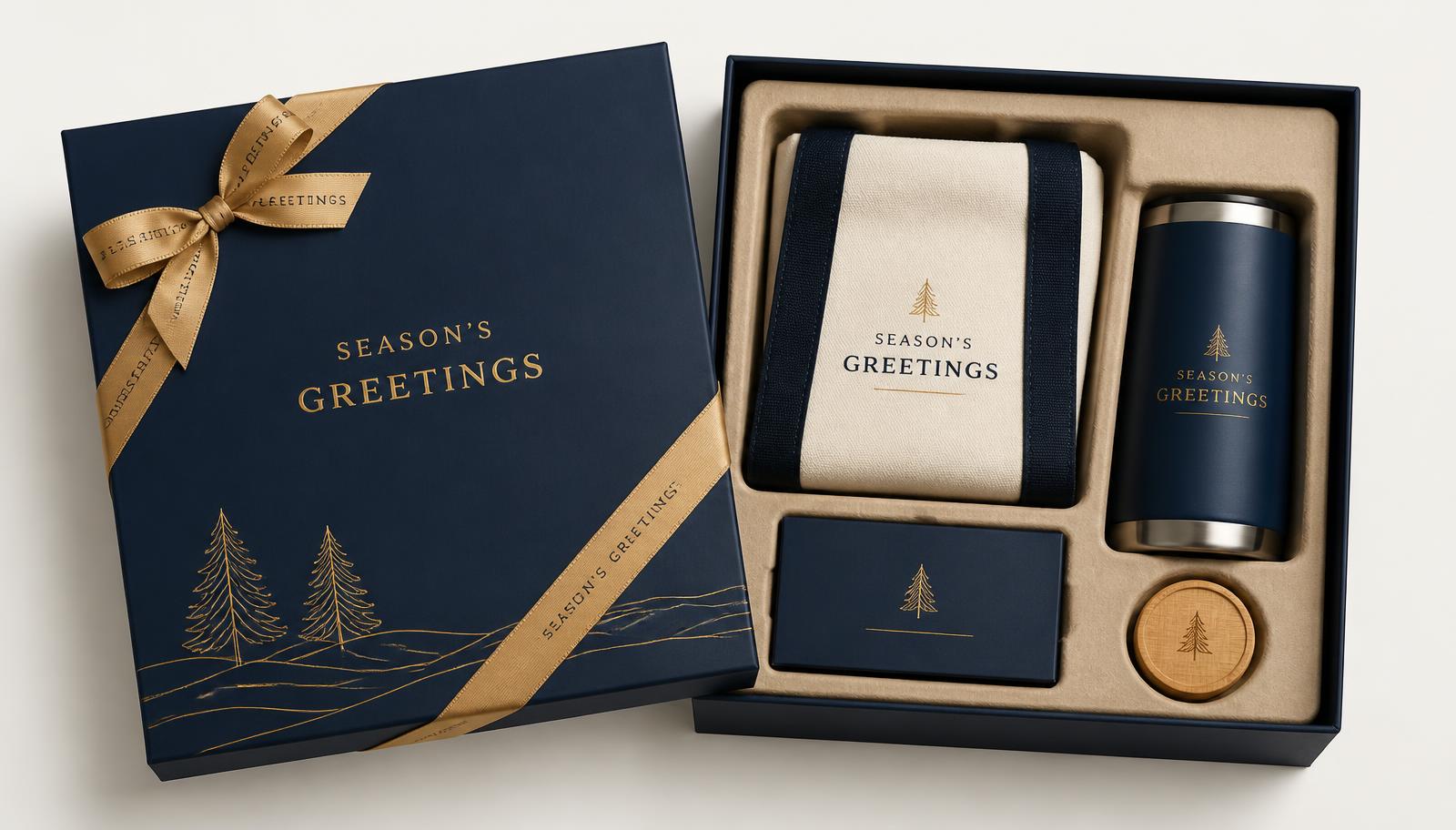
A gift box is a product in its own right. It has a bill of materials, a tolerance stack and a failure mode — and the failure mode is a lid that no longer fits after the insert is loaded.
The outer shell is 1,200–1,500 gsm greyboard wrapped in a specialty paper. Colour is matched to the client's Pantone on the wrap, not printed over it, which is why deep navy and forest boxes hold their tone far better than a four-colour print on white board.
Decoration on the lid is usually hot foil stamping or debossing. Foil gives the gold accent most year-end programs want; debossing gives a quieter, tactile finish that photographs well under directional light. Both need a metal die, which is a one-time cost of roughly USD 60–120 per design.
Inside, the insert decides how the gift feels when opened. Moulded pulp is our default: it is recyclable, holds a tumbler securely, and costs less than EVA foam at volume. Each cavity is drawn from the actual product dimensions plus a 1.5 mm tolerance, so a change of tumbler mid-program means a new insert tool.
Ribbon, card stock and tissue are the last layer and the easiest to personalise per client. A single box format can serve several recipient tiers by swapping the printed card and the contents while keeping the same shell and insert.
Assembly is done by hand in a dust-controlled room, then each box is weighed. A weight check is the fastest way to catch a missing component before a pallet ships.